Coordinates as translators between vectors and tuples
Once a basis is fixed, every vector gains a numeric fingerprint: the ordered coefficients. Changing basis relabels the same geometric object .
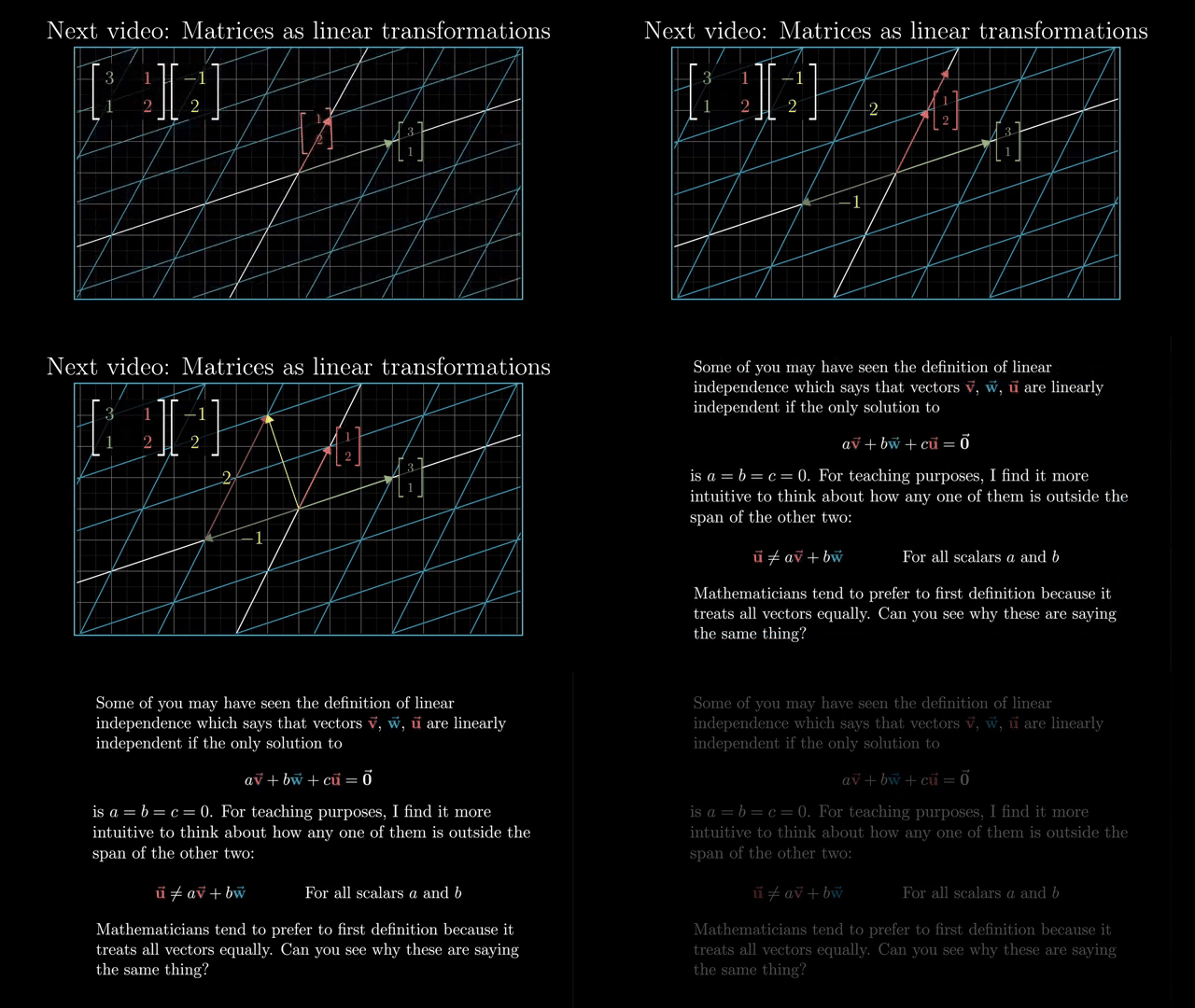
If you reorder basis vectors, coordinates typically permute accordingly. Coordinates are tied to basis order, not to geometry alone. Two bases for the same subspace relate by an invertible change-of-basis matrix in later formalism.
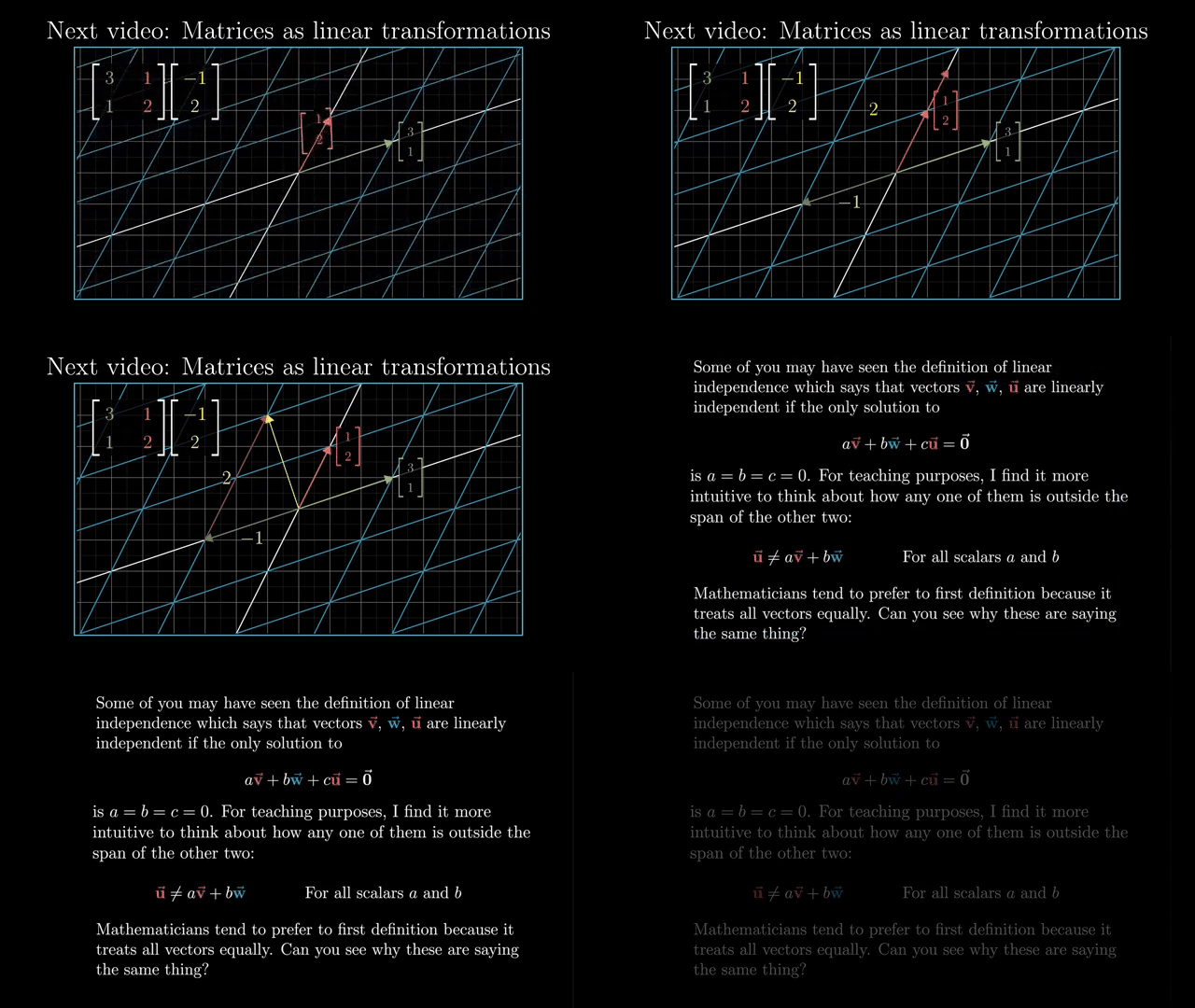
A basis matrix with columns equal to basis vectors in standard coordinates is invertible when those columns are independent and span the ambient $\mathbb{R}^n$ for the subspace. That invertibility is the algebraic shadow of having a genuine basis.
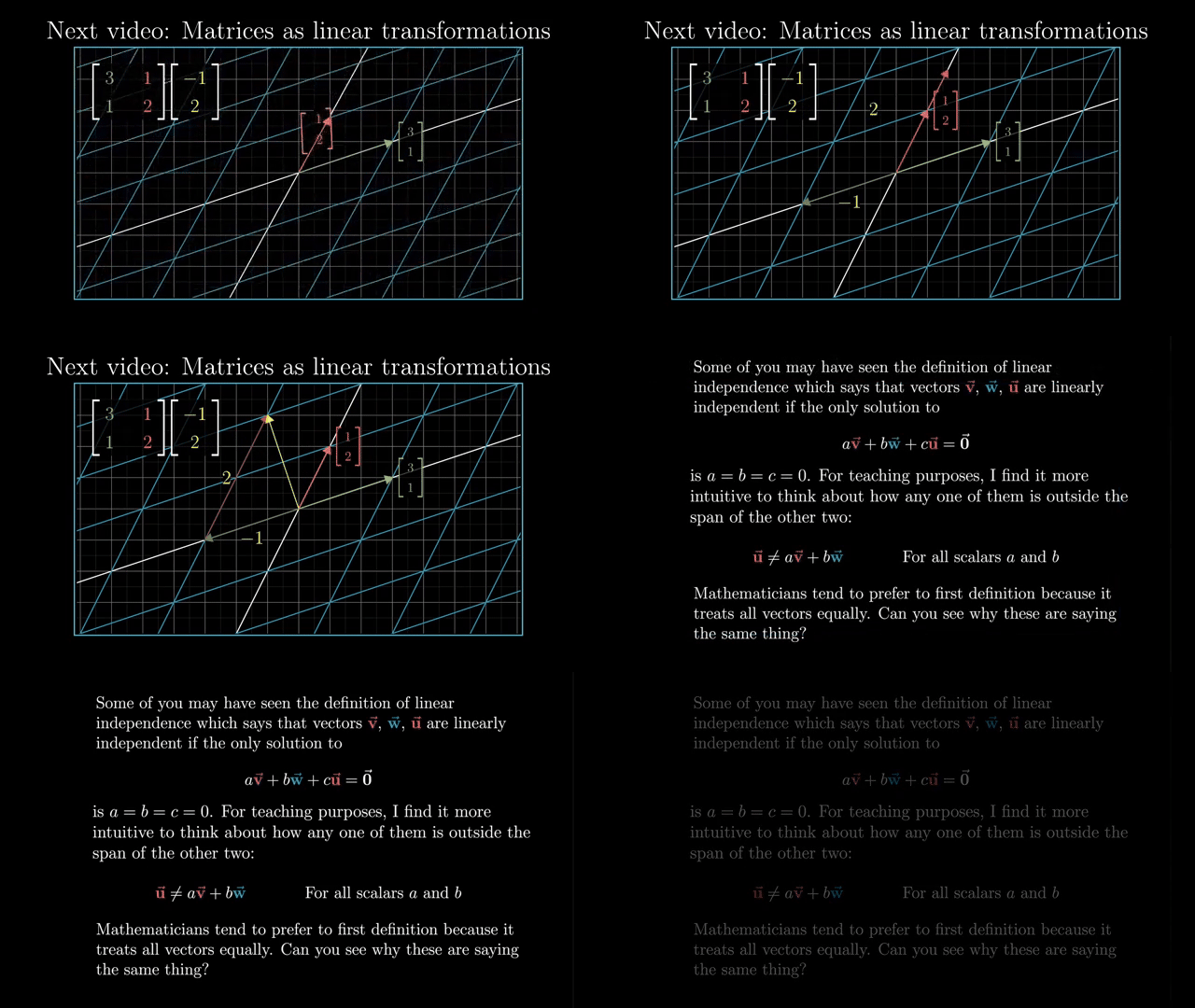
Implementation edge case: permuting basis vectors permutes coordinate slots without moving geometry. A vector in a plane described by $\mathbf{b}_1,\mathbf{b}_2$ needs exactly two coordinates, one per basis vector.
Check your understanding. The tasks below rest on these ideas: Correct: each coordinate slot belongs to a specific basis vector, so reordering the basis reorders the coordinates. Not quite: the numbers do move, remain well-defined, and are permuted rather than negated. Correct: converting coordinates between two bases of the same space is an invertible linear map. Not quite: it is generally not the identity, can include shears, and must be invertible (a projection loses information). Correct: independent, spanning columns mean full rank, which is equivalent to invertibility. Not quite: determinants of real matrices are real, orthonormality is sufficient but not required, and symmetry is irrelevant. Correct: coordinates count basis vectors, and a plane's basis has two. Not quite: the ambient dimension, flatness, and length do not change how many coefficients the basis requires.
Related cards
Video Content
Tasks
Card Info
- Topic: Mathematics
- Difficulty: Beginner
- Completed: 0 users
Creator
