Dice sums and diagonals: where index-pairs live
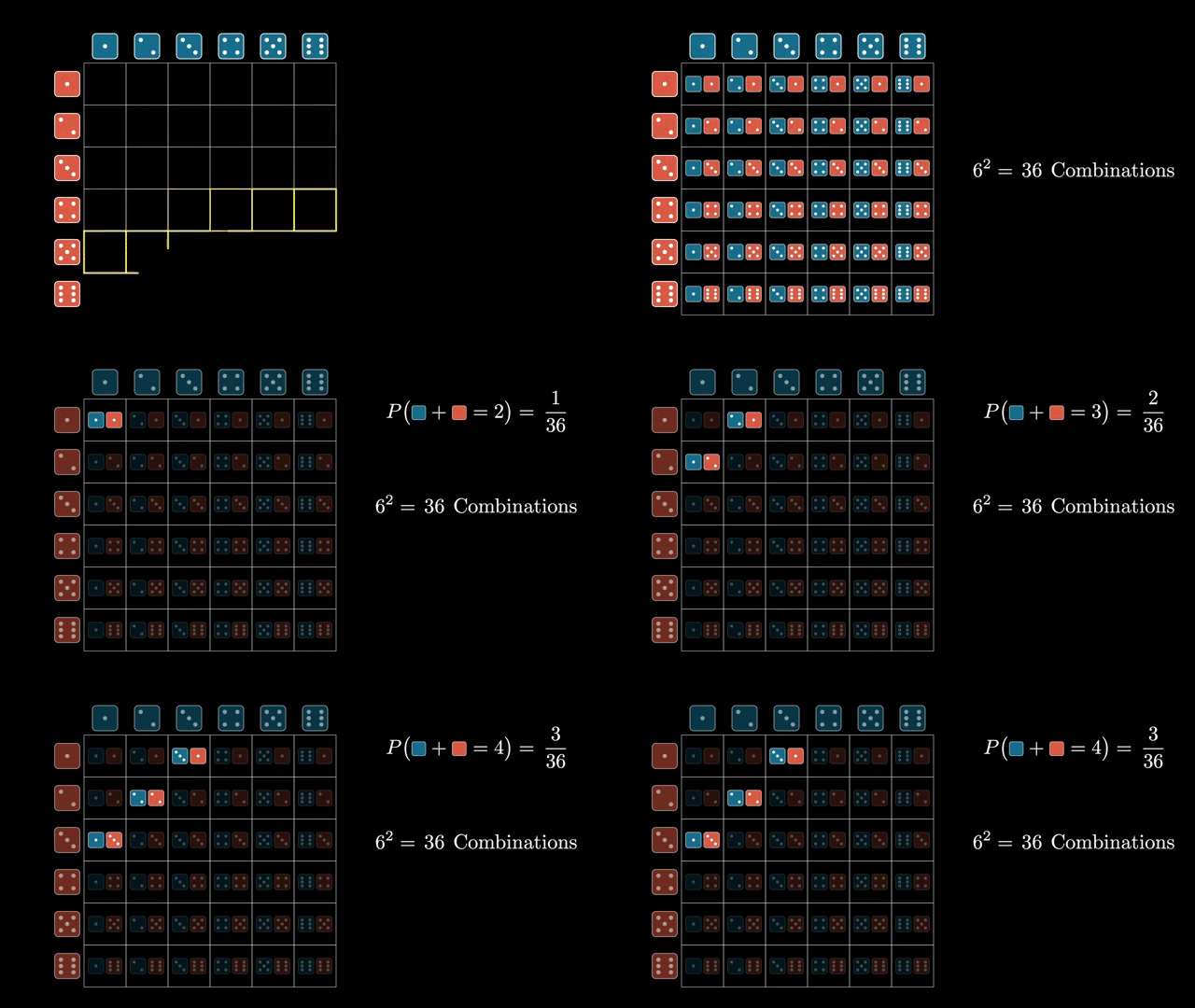
The dice block is the first full, concrete use case. Two fair dice produce 36 ordered outcomes, and placing them in a $6\times 6$ grid makes one fact immediate: all outcomes with the same sum lie on anti-diagonals . Counting one anti-diagonal is therefore the probability mass for one total. This is not a trick; it is the index condition $i+j=n$ drawn as geometry.
The lecture then shifts to a second visualization that becomes the standard algorithmic picture: keep one row fixed, flip the other row, and slide it. At each shift, vertical alignments pick out exactly the pairings that share a target sum. The anti-diagonal count in the grid and the overlap count in the slide picture are identical information viewed from different coordinate systems .
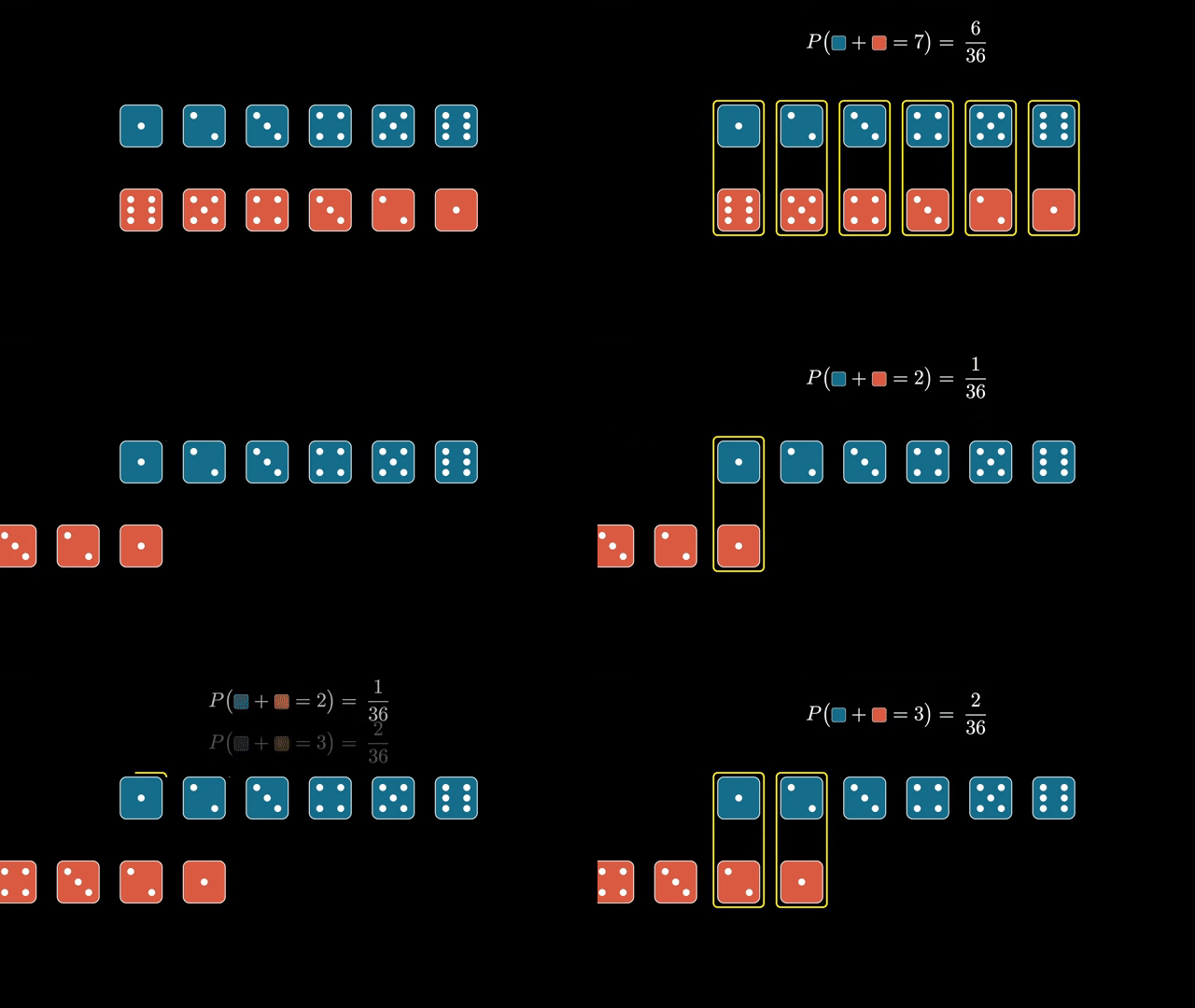
The professional extension is biased dice. In the fair case, each admissible pair contributes equally, so we only count pairs. In the biased case, each admissible pair contributes a product of probabilities, so we multiply pairwise and then add. Same geometry, different weights. This is the exact bridge from a counting story to the general convolution formula.
Related cards
Video Content
Tasks
Card Info
- Topic: Mathematics
- Difficulty: Beginner
- Rating: 4.0 / 5.0
- Completed: 1 users
Creator
