Orthogonal maps split into rotations and reflections
Orthogonal maps satisfy $Q^TQ=I$. Determinant $\det Q=\pm1$ separates proper rotations ($\det Q=1$) from improper maps ($\det Q=-1$) that include reflections . Cross parity depends on this sign.
Householder reflections across a hyperplane have determinant $-1$. Products of two reflections can yield a rotation with determinant $+1$: an even number of reflections restores orientation. Lie group SO(3) is the rotation group used for rigid body attitude.
Navigation and robotics repeatedly use SO(3) because many sensors report orientation without reporting scale. That is why body-frame normals rotate cleanly while non-uniform scaling requires extra care.
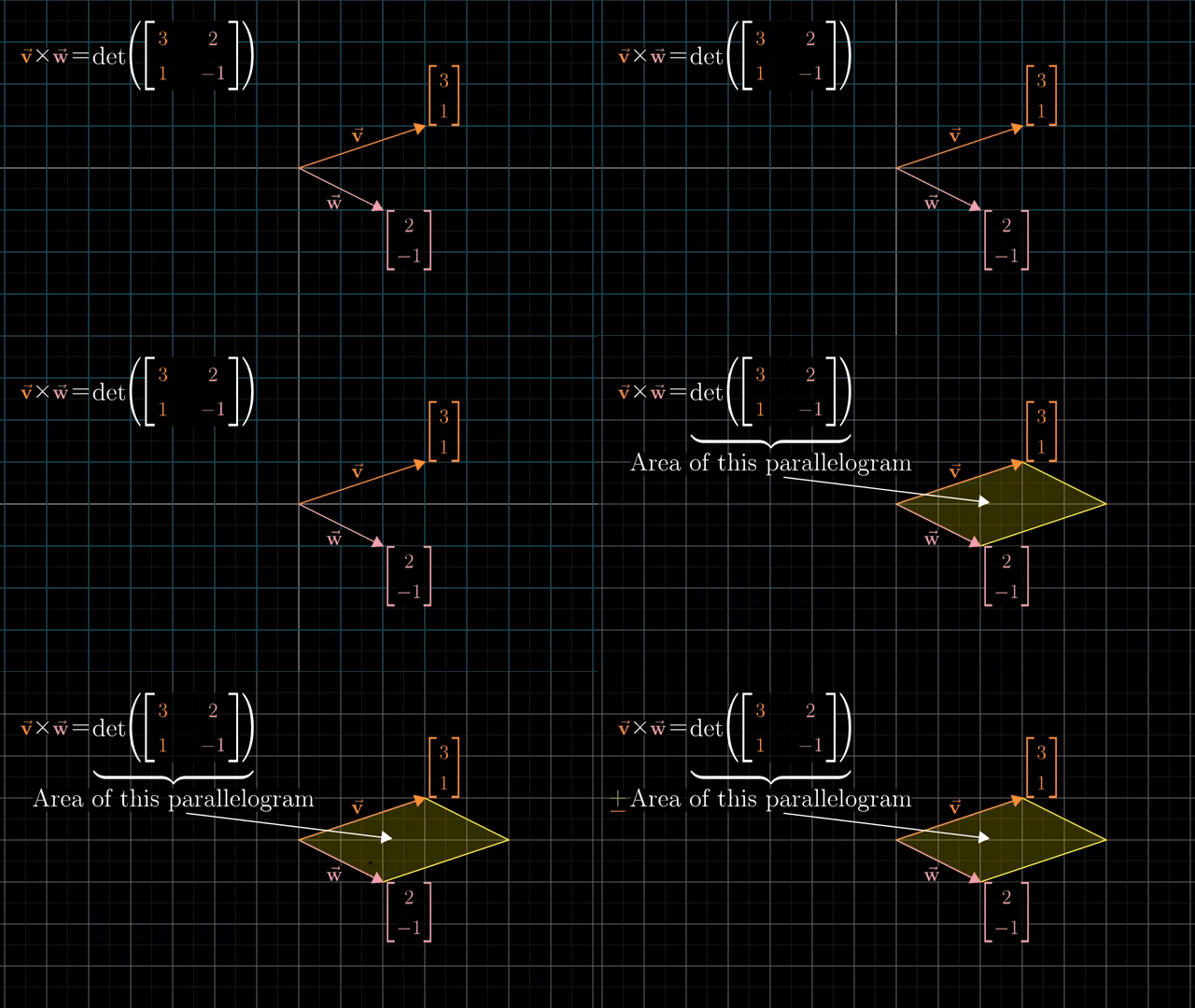
Physical devices such as IMU frames or aircraft body axes are often modeled with SO(3) when only orientation (not scaling) matters. Cross products behave predictably under those maps.
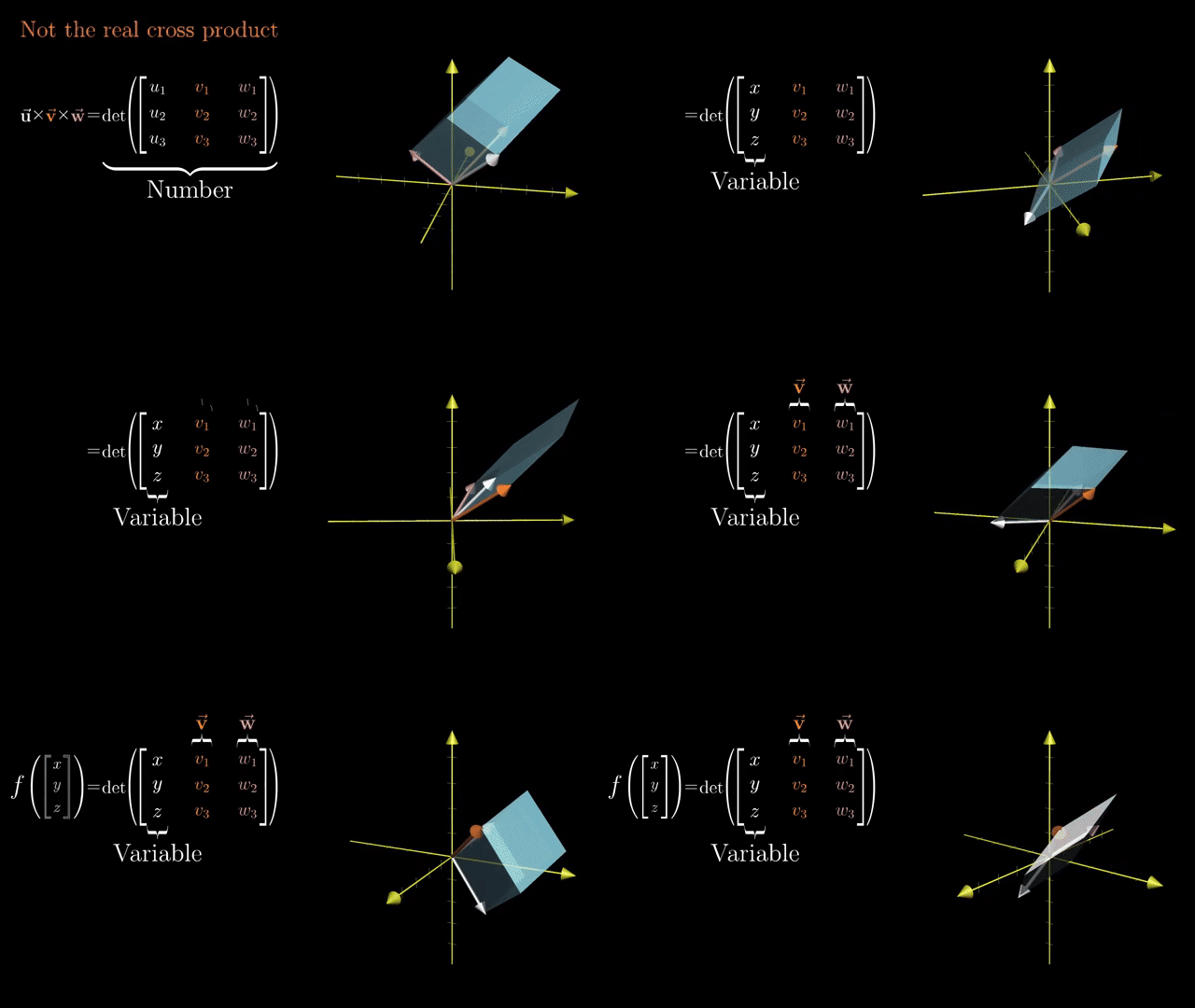
Improper orthogonal maps still preserve lengths and angles but flip orientation. Expect sign changes in cross formulas when a reflection sneaks into the decomposition of $T$.
Even length-preserving maps can fail to preserve cross if they reverse orientation; determinant sign is the quick diagnostic.
Composition of rotations remains a rotation; composition with a reflection picks up another possible sign flip in cross formulas.
Related cards
Video Content
Tasks
Card Info
- Topic: Mathematics
- Difficulty: Advanced
- Completed: 0 users
Creator
