Orientation: sign of determinant
The sign of $\det A$ tells you whether orientation is preserved or reversed . A two-dimensional reflection across a line through the origin has determinant $-1$ because handedness flips. A rotation in the plane has determinant $+1$.
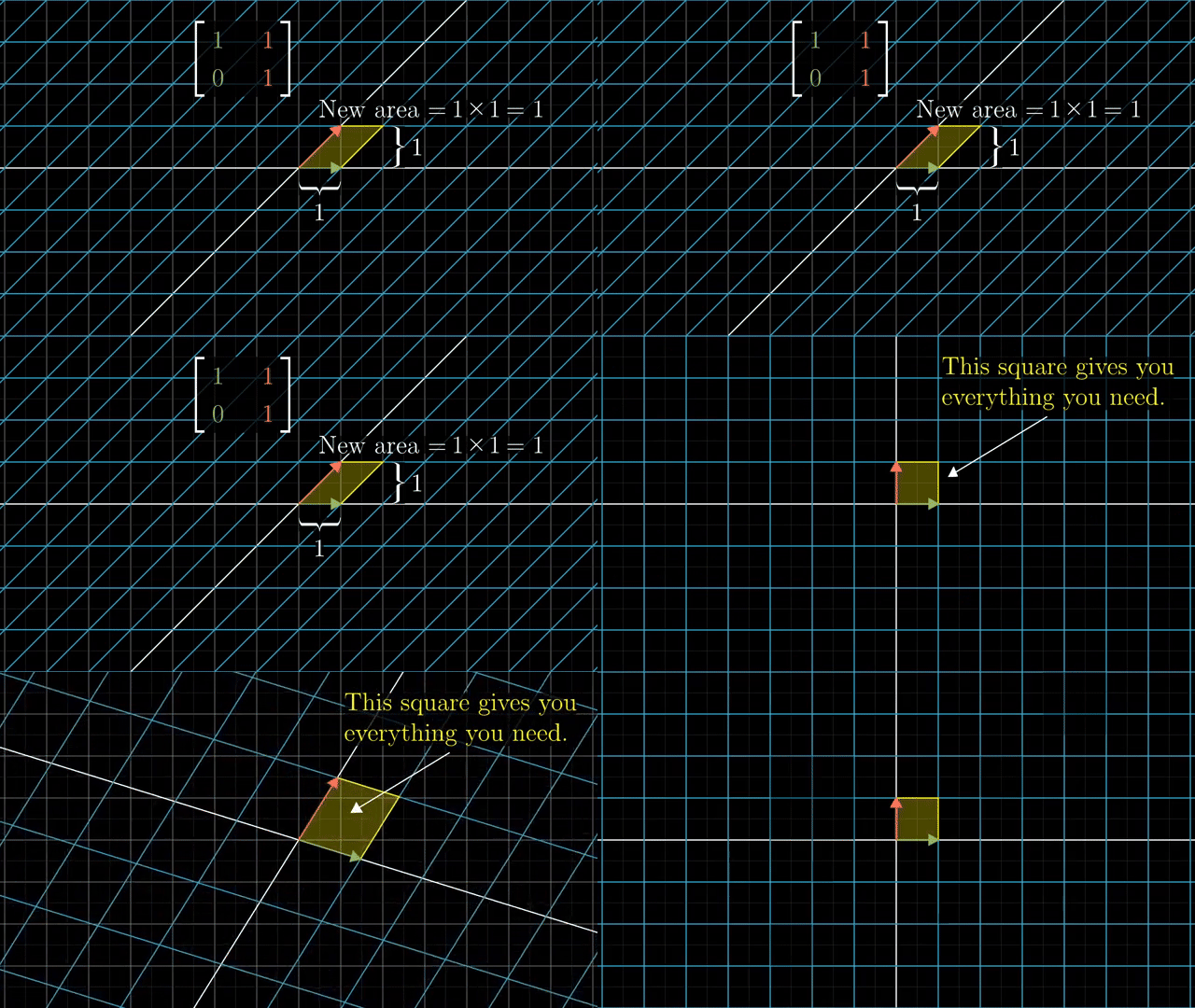
Column operations make the sign concrete: swapping two columns multiplies the determinant by $-1$. Scaling one column by $c$ scales the determinant by $c$ (multilinearity in columns). Adding a multiple of one column to another leaves the determinant unchanged, matching row reduction moves you will use computationally. Swapping two columns flips the sign; scaling one column scales the determinant by the same factor .
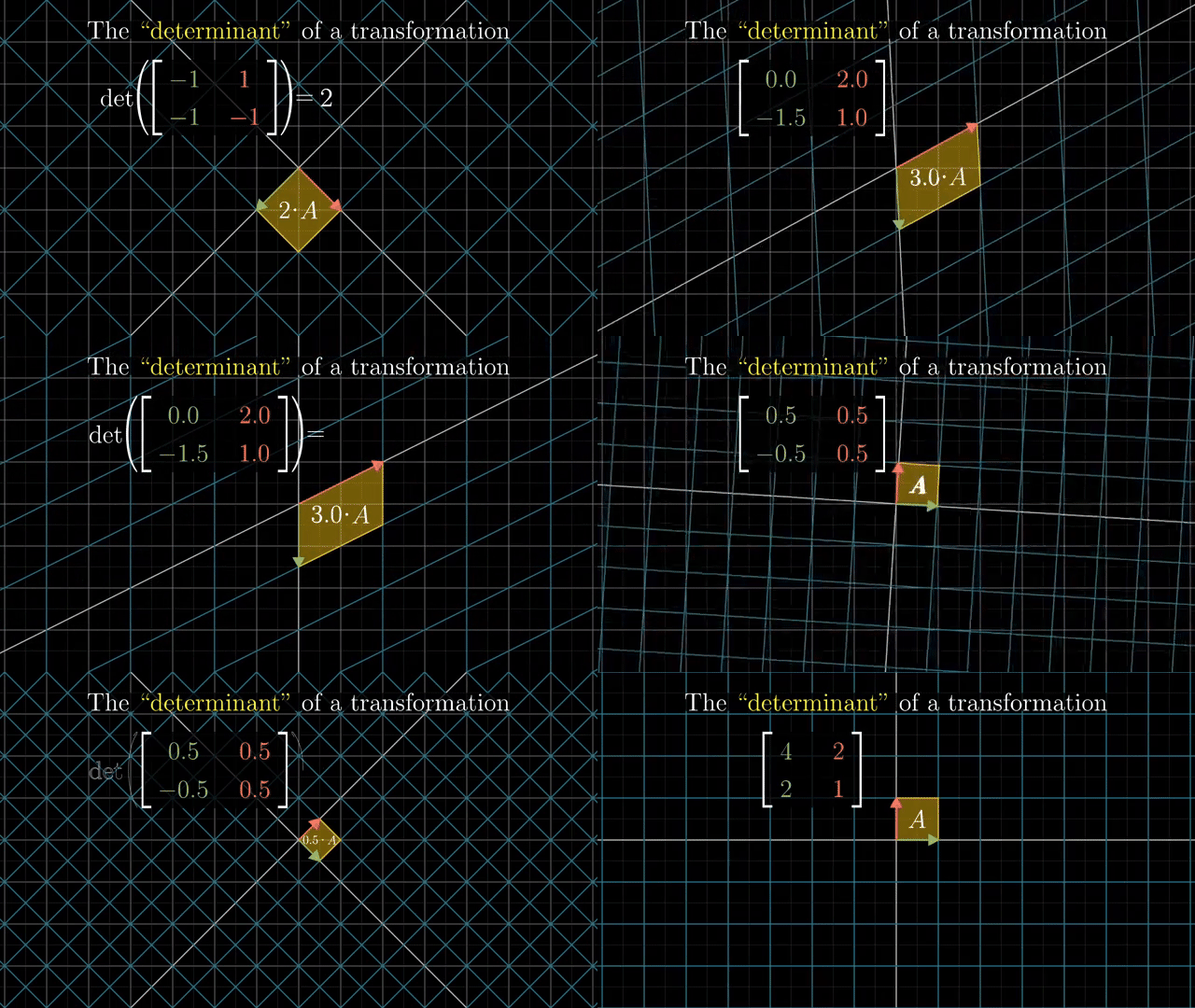
Even dimensions can hide orientation intuition: composing two reflections can look like a rotation in some coordinates. The determinant sign remains the reliable algebraic test. For $\det([\mathbf{v}\ \mathbf{v}])=0$ in $\mathbb{R}^2$, identical columns produce a degenerate parallelogram with zero area. A $180^\circ$ rotation in the plane preserves area and orientation, so its determinant is $+1$; a reflection across a line through the origin has determinant $-1$ because handedness flips while area magnitude stays the same. Track sign and magnitude separately in every 3D example you sketch.
Related cards
Video Content
Tasks
Card Info
- Topic: Mathematics
- Difficulty: Intermediate
- Completed: 0 users
Creator
