Composing rotations and shears in animation pipelines
Computer graphics often stores rigid motions and shears in $4\times 4$ homogeneous matrices so translation can ride alongside linear maps . The $3\times 3$ block is still the linear part you have been studying: rotations about axes through the origin, scales, reflections, and shears that fix a plane.
Many shears in three dimensions have determinant $1$: they slide one direction while fixing a plane, distorting angles but not changing the volume scale factor. That is different from orthogonal matrices $Q$ with $Q^T Q=I$, which preserve lengths and angles and therefore model rigid attitude changes without spurious stretching.
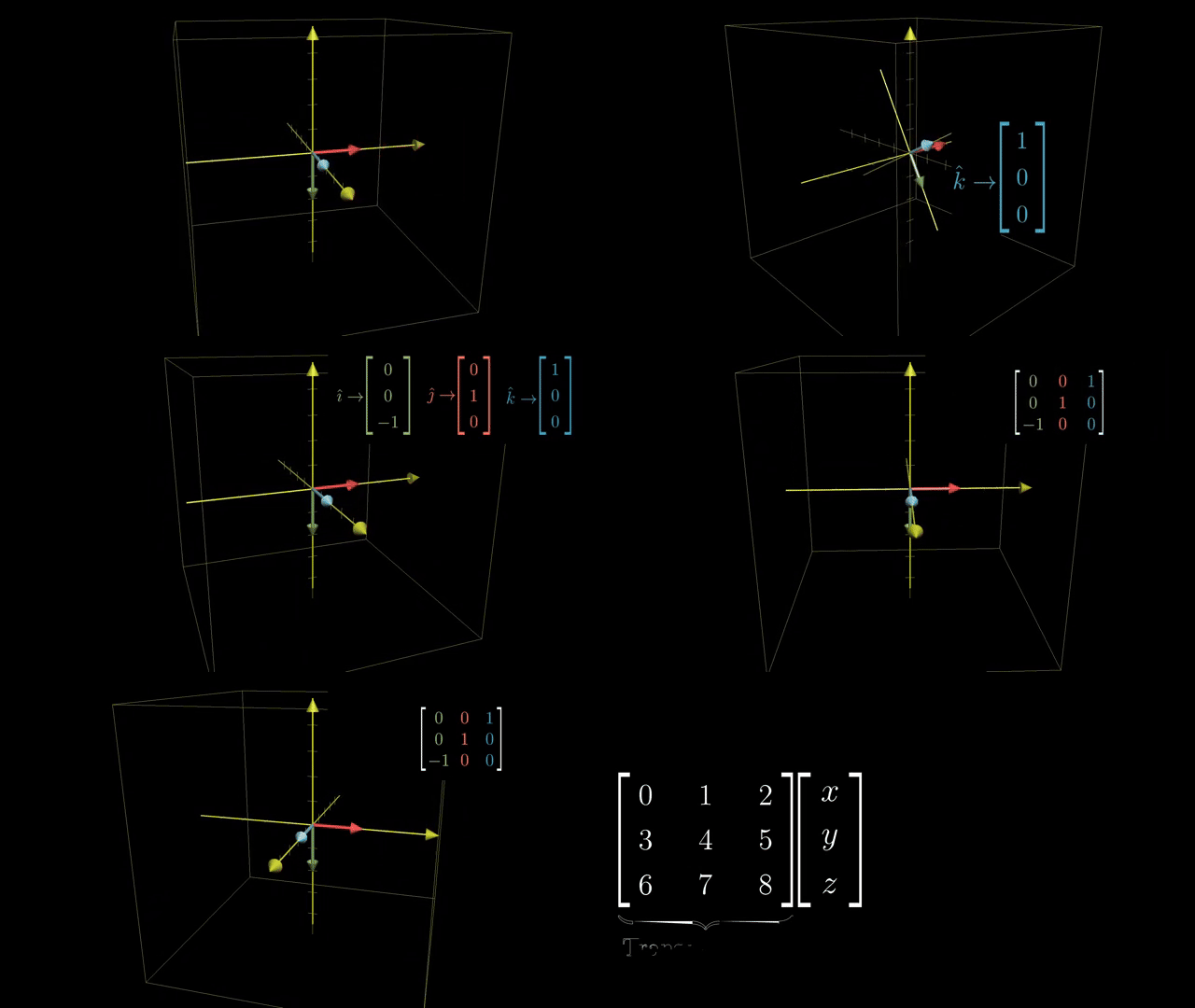
Composition order matters for Euler-angle style rotations: rotating about $x$ then $y$ is not generally the same as $y$ then $x$. Gimbal lock is a famous symptom of how certain parameterizations behave, not a failure of linearity itself.
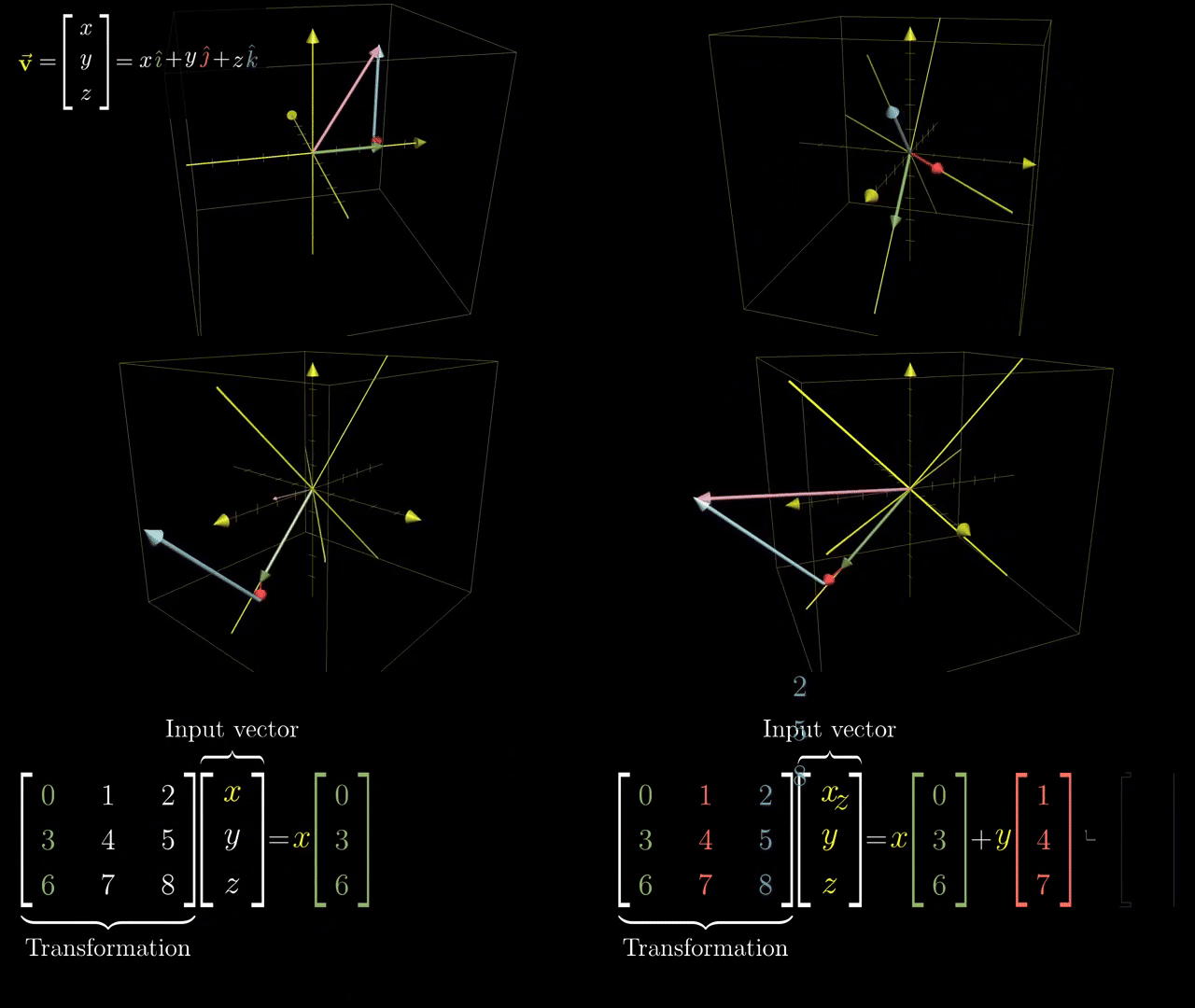
When debugging a scene graph, factor a transform into "linear block plus translation" mentally. Only the block contributes to determinant signs and volume scaling; translation never appears in the $3\times 3$ determinant story. Euler-angle gimbal lock is a reminder that composition order and parameterization matter even when every piece is linear .
Related cards
Video Content
Tasks
Card Info
- Topic: Mathematics
- Difficulty: Intermediate
- Completed: 0 users
Creator
