Vectors as displacements, not "a point you happen to draw"
The chapter opens with a deliberately informal picture: a vector is an arrow encoding how the world moves from one place to another. Length records how far; direction records which way. Translating that arrow across the plane is allowed because you care about the change in position, not the ink on a particular square of graph paper .
Students often confuse vector with line segment anchored at the origin. The resolution is consistency: once you agree that two arrows with the same length and direction label the same vector, every theorem you prove is about displacements, not decorations. That equivalence class view is what makes head-to-tail addition meaningful later.
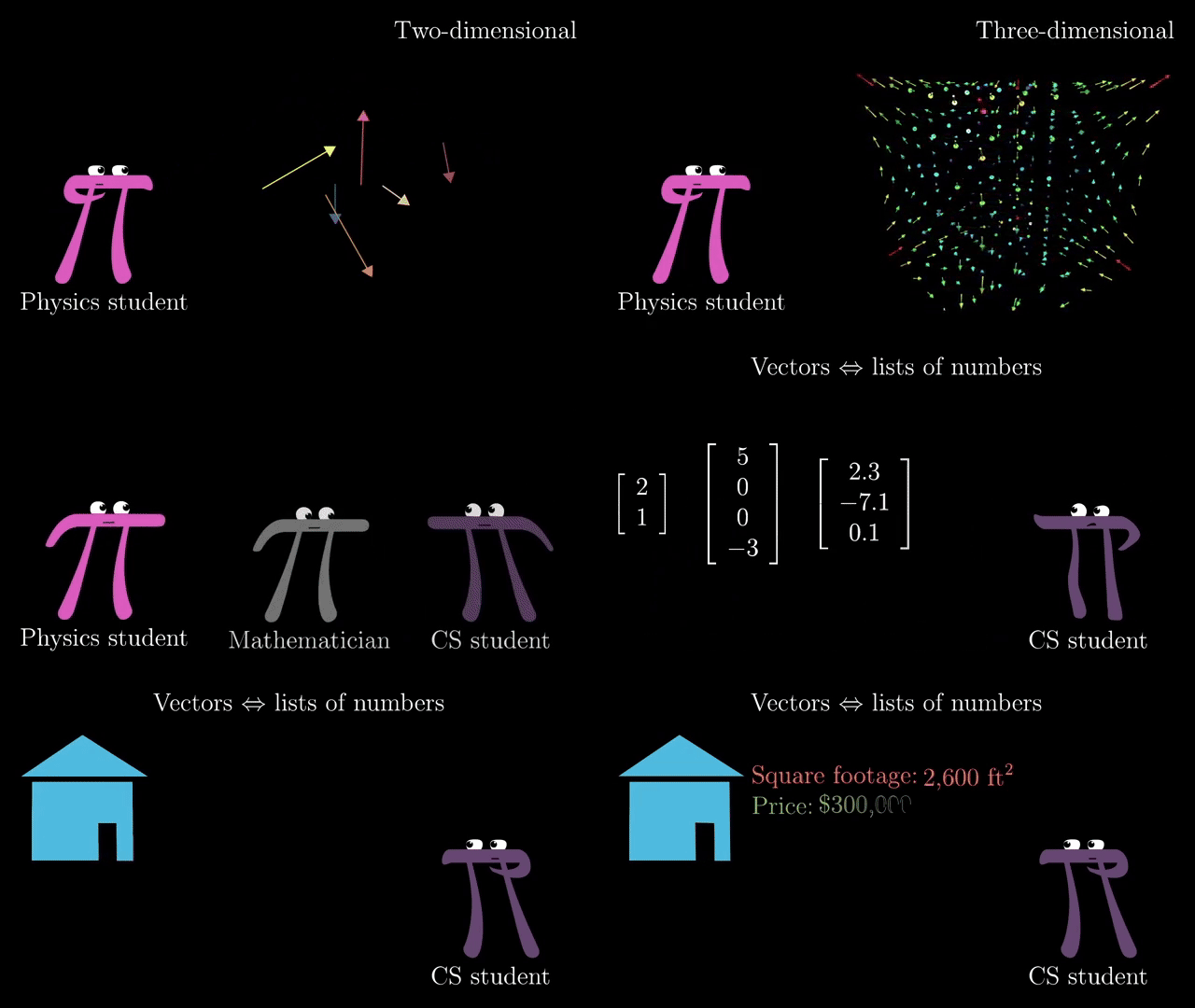
The edge case is the zero vector: every component zero, arrow collapsed to a point, yet it still counts as a vector because it is the additive identity. Without $\mathbf{0}$, vector addition does not close as an algebraic structure.
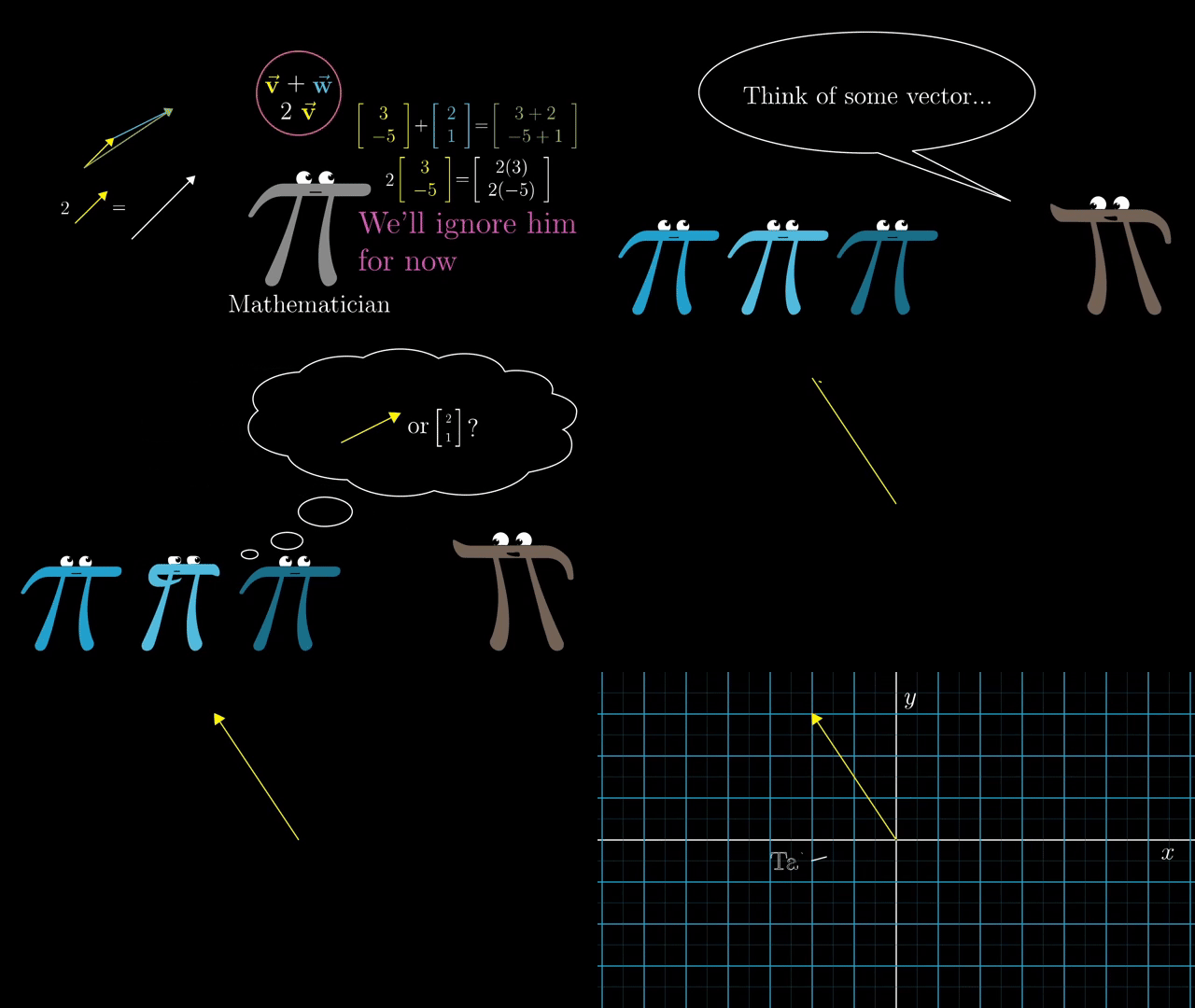
Professional habit: when a diagram draws an arrow from the origin, read it as one representative of a displacement family, not as a privileged point. The same geometric object can be drawn with its tail anywhere once you accept translation invariance .
Related cards
Video Content
Tasks
Card Info
- Topic: Mathematics
- Difficulty: Beginner
- Completed: 2 users
Creator
